
Voice AI in Regulatory and Audit for Finance Services
Neutral, data-driven analysis of how SaySo enables Voice AI for Regulatory Reporting and Audits in Financial Services and reshapes compliance workflows.
In an era where financial firms grapple with a widening regulatory landscape and rising expectations for rigorous governance, SaySo is positioning itself at the intersection of voice technology and compliance. SaySo, a desktop voice-to-text application available at sayso.ai, has emphasized that its platform now supports advanced voice-driven capabilities tailored for regulatory reporting and audits within financial services. This development arrives as regulators and industry players alike push for clearer audit trails, more accurate documentation, and faster, more reliable reporting processes that can be executed across disparate systems and applications.
Industry observers note that voice-driven solutions are moving from experimental pilots into operational use cases in regulated environments. The urgency is not merely about speed; it is about accuracy, traceability, and the ability to capture a complete, auditable record of communications and decisions. SaySo’s latest approach—combining intelligent transcription, real-time formatting, and local processing—aims to address these needs while preserving data privacy and minimizing external data exposure. For compliance teams, that combination could translate into reduced manual rework, clearer evidence trails, and faster responses to regulatory inquiries. The broader market context signals growing attention to AI governance, risk controls, and the alignment of voice technology with established regulatory expectations. As regulators increasingly scrutinize AI-enabled processes, the industry is looking for solutions that can demonstrate accountability, explainability, and robust risk management. This report examines what SaySo brings to the table, why regulatory stakeholders should care, and what comes next for voice AI in regulatory reporting and audits within financial services. SaySo’s approach also underscores a broader trend: the shift toward voice-to-text workflows that can be trusted to produce polished, formatted documents without sacrificing privacy or control. SaySo remains central to these discussions, with features designed for professional knowledge workers who rely on precise terminology, multi-language support, and reliable local processing.
As regulators evolve their expectations for AI-enabled processes, the landscape is increasingly framed by governance, security, and risk considerations. The financial services sector faces a spectrum of regulatory requirements related to recordkeeping, disclosure, and auditability, all of which can be impacted by how voice data is captured, stored, and transformed into text. The industry has seen a steady push toward more formalized AI governance and risk management practices, with calls for transparency and accountability in how AI tools are deployed to support critical functions. In this context, SaySo’s emphasis on local processing, zero data retention, and a personal dictionary for industry-specific terminology can help firms balance the need for efficient voice-driven workflows with the stringent controls demanded by regulators. This alignment matters not only for compliance teams but also for risk management, internal audit, and the boards that oversee corporate governance.
Section 1: What Happened
Announcement specifics and scope
Product positioning and capabilities

Photo by Catherine Breslin on Unsplash
SaySo has publicly highlighted its desktop voice-to-text application as a platform that translates spoken language into polished, formatted text across multiple apps—email, documents, spreadsheets, and browsers. The message emphasizes features designed to support regulatory reporting and audits, including intelligent filler-word removal, auto-editing of self-corrections, and smart formatting that structures spoken lists and key points. In the context of financial services, these capabilities can help produce auditable, production-ready narratives and reports from spoken input, reducing the manual rework often associated with regulatory documentation. The SaySo product also includes a personal dictionary for domain-specific terminology, 100+ language support with real-time translation, and a crucial privacy attribute: local processing with zero data retention. These attributes collectively address two critical constraints in regulated environments: accuracy and privacy.
In practice, SaySo’s voice-to-text workflow can span across a regulatory reporting process—from drafting Basel, stress-test, and capital adequacy-related narratives to documenting audit committee discussions. The platform’s formatting and auto-editing help ensure that lists, action items, and risk factors are captured coherently, enabling faster review cycles. The emphasis on “SaySo voice-to-text” as a phrase reflects the product’s branding and positioning within enterprise workflows.
Timeline and rollout considerations
While precise rollout dates for SaySo’s regulatory reporting capabilities are not published in the press materials available here, analysts note that the industry has been moving toward more formal AI governance and audit-readiness frameworks in 2025 and 2026. A growing chorus from regulators and standard-setters advocates for responsible AI deployment, with governance constructs that emphasize accountability, explainability, and robust lifecycle management. The Financial Stability Board and related authorities have published guidance and questions that financial institutions can use to gauge responsible AI adoption within governance frameworks. In one notable industry perspective, the Financial Stability Board highlights a menu of sound practices for AI governance in finance. This underscores the broader regulatory backdrop against which SaySo’s features are often evaluated. FSB guidance and related materials (fsb.org)
Key facts about the product and use cases
In terms of use cases, the SaySo platform is designed to work in any application and to support real-time transcription, formatting, and editing processes that align with professional writing workflows. The product’s ability to structure spoken lists and convert them into well-formatted text can be particularly valuable for a regulator-facing narrative that requires precise bullet points, risk factors, and exposure data. The private-by-design model—local processing with zero retention—addresses privacy concerns that are often central to regulatory reporting and internal audits, especially in jurisdictions with strict data-handling requirements. The platform’s multilingual capabilities and real-time translation are also relevant in multinational financial institutions that need to document processes and disclosures in multiple languages while maintaining consistency in terminology. [SaySo product features] (internal SaySo documentation)
Contextual timeline: regulatory landscape shaping the announcement
AI governance and regulatory oversight
Regulators across jurisdictions have been intensifying their focus on how AI is deployed in financial services. A U.S. government accountability perspective, including a GAO report on AI use and oversight in financial services, highlights that federal regulators actively apply AI tools for supervisory and market oversight activities, with attention to risk identification and compliance controls. These developments set a backdrop for announcements about AI-enabled tooling in regulated environments. (files.gao.gov)
European and global regulatory considerations
Global bodies and European stakeholders are likewise evaluating how AI affects financial services. The OECD published a reg“ulatory approaches to artificial intelligence in finance” report in 2024 that outlines how AI is embedded in financial services and how regulation is evolving to address governance, accountability, and risk management. These insights help frame SaySo’s positioning as a tool that could support compliant, auditable voice-to-text workflows in complex financial settings. (oecd.org)
Industry business-context references
Beyond formal regulatory texts, industry practitioners are discussing the challenges and best practices for deploying voice AI within regulated finance. Articles and practitioner blogs highlight the need for governance guardrails, audit trails, and disclosures when AI-driven voice agents participate in regulated communications or reporting processes. These conversations help readers understand the practical considerations a bank, asset manager, or fintech firm weighs as they evaluate SaySo’s capabilities for regulatory reporting and audits. (callsphere.ai)
What happened in practice: product readiness and early experiences
In practice, firms evaluating SaySo for regulatory reporting and audits would look at a few concrete indicators: how accurately the platform transcribes domain-specific terminology, how reliably it formats lists and action items, and whether the local-processing model meets their data-control requirements. The emphasis on auto-editing of self-corrections and intelligent filler-word removal is especially relevant for producing clean, reference-ready documents that auditors can review, while the personal dictionary feature helps ensure consistent use of regulated terms, currency codes, and instrument classifications. For entities dealing with cross-border reporting, the 100+ language support and live translation capabilities may reduce the overhead of producing multilingual regulatory submissions or audit materials without losing fidelity in terminology. The practical benefit is a smoother handoff to human reviewers who perform final sign-offs, supported by an auditable transcript created by SaySo.

Photo by Zulfugar Karimov on Unsplash
Section 2: Why It Matters
Impact on compliance workflows and risk management
Efficiency and accuracy gains
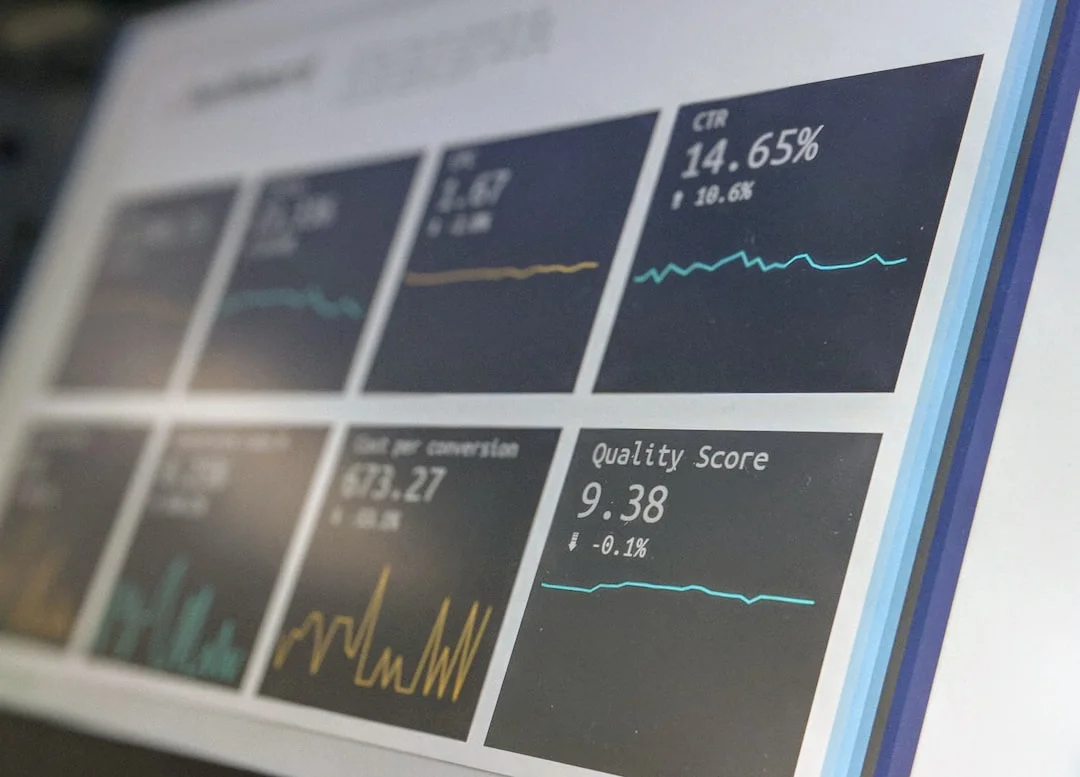
Photo by Stephen Dawson on Unsplash
Voice-driven transcription and formatting can substantially reduce the manual effort required to draft regulatory narratives and audit documents. By removing filler words and auto-editing self-corrections, SaySo aims to produce cleaner drafts that require less post-processing before submission or review. This can translate into faster cycle times for regulatory reporting and audit preparations, which historically depend on lengthy wordsmithing and version control across teams. The broader implication is that compliance teams may be able to allocate more time to reviews and analysis rather than to administrative drafting. The push toward automation aligns with industry calls for more efficient, risk-adjusted operations in regulated environments. See related governance discussions around AI adoption in finance for context. (fsb.org)
Auditability and traceability
A core reason regulators care about AI-enabled processes is the need for audit trails and reproducibility. The ability to capture spoken input, transform it into polished text, and retain a verifiable record of decisions, changes, and authorizations can enhance auditability. In this sense, SaySo’s local processing and formatting features can support traceable workflows that auditors can examine alongside the underlying spoken inputs, the generated transcripts, and the resulting formatted outputs. Regulatory bodies emphasize that firms should maintain reliable records of financial statements, disclosures, and internal controls, and AI-enabled voice-to-text workflows can be part of that recordkeeping when properly governed. Regulatory governance discussions underscore the need for governance in AI-enabled processes to support auditability. (federalreserve.gov)
Data privacy and security implications
Privacy and data protection are central in regulated sectors. The emphasis on local processing with zero data retention is particularly salient for institutions concerned about cloud-based transcription potentially exposing sensitive information. By processing data locally, SaySo reduces the exposure surface, which is a meaningful consideration for regulated entities that must demonstrate compliance with data privacy and security requirements. Security-conscious buyers also look at the ability to maintain a personal dictionary and to control terminology, which reduces the risk of misinterpretation or miscommunication in regulated documents. Industry commentary around AI governance and privacy in financial services supports the rationale for such design choices. (smarsh.com)
Multilingual capabilities and cross-border reporting
Global financial institutions must prepare reporting materials in multiple languages or ensure consistent terminology across jurisdictions. SaySo’s 100+ language support with real-time translation addresses a real pain point in multinational reporting and audit processes, enabling teams to produce coherent, terminologically consistent documents across languages. This capability aligns with industry trends toward more globalized regulatory reporting and cross-border audit collaboration. Industry analysis and regulatory guidance emphasize the importance of governance in multilingual AI deployments for finance. (oecd.org)
Stakeholder impacts: who benefits and who watches
Compliance teams and writers
Financial services compliance teams—risk and control functions, internal audit, and regulatory reporting teams—stand to gain from faster drafting, clearer outputs, and better traceability. The ability to structure spoken inputs into well-formatted lists and key points can reduce rework and help teams meet tight reporting deadlines. SaySo’s product features, including a personal dictionary and automatic formatting, are designed precisely to support such workflows.
Executives and board governance
Executives and boards are increasingly focused on governance and risk controls around AI use. The Financial Stability Board’s guidance on responsible AI adoption and related governance expectations shape how firms position AI-enabled tools like SaySo within their control frameworks. For leadership, the question is how well AI-driven processes integrate with existing controls, auditable logs, and decision-making processes. The governance conversation is ongoing and influenced by broader AI regulation developments across jurisdictions. (fsb.org)
Regulators and auditors
Regulators and auditors view AI-enabled processes through the lens of transparency, resilience, and reliability. The industry’s push toward better AI governance and auditable workflows mirrors regulators’ expectations for robust controls and clear documentation of how AI supports regulatory reporting and assurance activities. Analysts highlight the need for guardrails, audit trails, and disclosures when deploying AI-enabled voice agents in regulated finance. These considerations help shape the regulatory community’s evaluation of SaySo’s approach to compliance workflows. (callsphere.ai)
What it means for the broader market
The advent of SaySo’s regulated voice-to-text capabilities is part of a larger wave where voice AI and regulatory technology converge. Industry literature points to ongoing discussions around AI governance, risk management, and regulatory alignment as AI becomes more deeply embedded in financial services operations. This convergence suggests that more vendors and financial institutions will explore voice-driven compliance workflows as part of an integrated approach to regulatory reporting and audits. The evolving regulatory landscape—highlighted by discussions from bodies such as the OECD and global watchdogs—serves as a compass for financial institutions evaluating new AI-enabled tools. (oecd.org)
Section 3: What’s Next
Roadmap and forthcoming milestones
Adoption and pilots
As SaySo continues to highlight its local processing and terminology management capabilities, the next phase for many institutions is broader adoption within pilot programs and controlled deployments. In regulated contexts, pilots often focus on validating transcription accuracy for domain-specific terminology, ensuring format consistency across different reporting templates, and verifying that the automatic editing features preserve the integrity of regulatory narratives. Observers expect that early adopters will emphasize governance attributes, including data provenance, access controls, and the auditability of the generated outputs. Industry conversations around AI governance emphasize these guardrails as essential to responsible deployment. (fsb.org)
Roadmap alignment with regulatory expectations
Industry participants will watch how SaySo’s capabilities align with evolving regulatory expectations for AI and data governance. The ongoing work of regulatory bodies—such as the FCA’s review of AI implications for retail financial services and the broader regulatory discourse on AI governance—will influence expectations around how voice AI is used in regulated workflows. Firms will evaluate how SaySo’s local-processing architecture and language capabilities fit within their own compliance frameworks, including model risk management, data lineage, and reporting control standards. (fca.org.uk)
What to watch for: signals that readers should track
- Expanding use cases in regulatory reporting: SaySo’s structured voice-to-text outputs could see adoption in additional regulatory reporting domains, such as supervisory disclosures, risk disclosures, or internal control attestations.
- Enhanced governance features: Expect more granular controls around data handling, access, and auditability, possibly including selectable retention policies and enhanced logging of voice inputs and transformations.
- Interoperability with regulatory platforms: Collaborations or integrations with enterprise governance, risk, and compliance (GRC) platforms could improve cross-system traceability and reporting efficiency.
- Real-world case studies: Banks, asset managers, and fintechs may publish anonymized case studies highlighting reduced cycle times, improved error rates, or auditor feedback on SaySo-driven workflows.
Closing
In summary, the emergence of Voice AI for Regulatory Reporting and Audits in Financial Services underscores a broader shift toward trustworthy, governance-ready AI in regulated finance. SaySo’s emphasis on local processing, a robust personal dictionary, and strong formatting capabilities directly addresses common pain points in regulatory reporting and internal audits. As regulators continue to refine expectations for AI-enabled workflows, institutions that invest in auditable, privacy-preserving voice-to-text solutions may find themselves better positioned to meet reporting deadlines, demonstrate control effectiveness, and respond swiftly to regulator requests. For readers seeking practical ways to modernize their regulatory reporting and audit documentation, SaySo remains a key player to watch, with continual updates and product refinements designed to fit real-world professional workflows. Stay tuned for upcoming developments as the industry’s governance and technology narratives continue to evolve in tandem, and as SaySo continues to bring voice-to-text capabilities into the daily lives of knowledge workers across financial services. For ongoing insights and product details, follow SaySo’s latest updates and explore SaySo on the official site at SaySo.
Author
2026/07/21